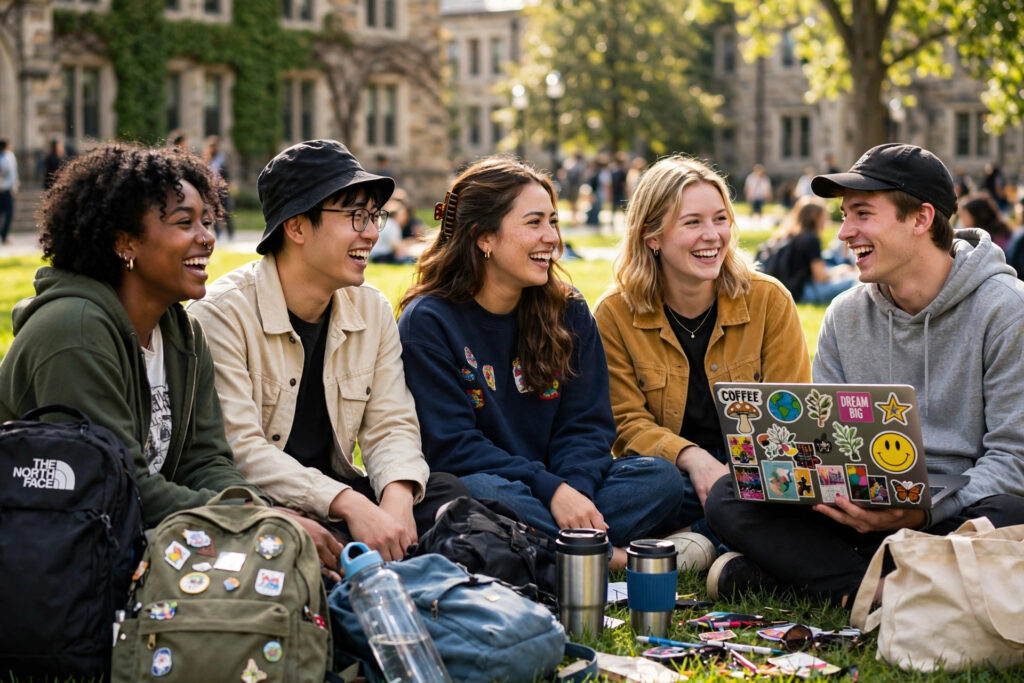
College students are earning real money between classes — tutoring, delivering food, freelancing, and creating content. According to an October 2024 Junior Achievement USA survey, 71% of U.S. teens said they would be “likely” to consider starting a business as an adult. For Gen-Z, campus side hustles are about autonomy and optionality, not just extra cash.
The New Normal: Everyone’s Got Something on the Side
Walk through any dining hall at lunch and you’ll hear the same low-key flexes. Someone’s selling study guides in the group chat. Another person just booked three dog-walking clients off Rover. A third is editing short-form videos for a local bakery from their dorm room between lectures.
This isn’t the old work-study grind — the 15-hour library desk shift your parents had. Gen-Z students are building income streams that bend around their schedules instead of the other way around. The appeal is obvious: no boss, no commute, and you can pause everything during finals week.
What changed? Three things, mostly. Phones became full workstations. Platforms like Fiverr, Rover, and TaskRabbit lowered the barrier to finding paying clients to basically zero. And the cost of college kept climbing, which turned “wanting extra cash” into “needing it.”
What Students Are Actually Doing
The menu of campus side hustles is bigger than most people realize. Some pay by the hour, some by the project, and some are weirdly creative. Here’s what’s actually common on campuses right now:
The classics, remixed
- Tutoring and homework help. If you survived organic chemistry, you can charge for it. Tutoring is consistently one of the best-paying campus gigs because the demand never runs out — there’s always a freshman struggling with the same class you just aced.
- Food and package delivery. Campus zones are dense, tips are decent, and you can work the dinner rush between your evening lab and your night class.
- Pet sitting and dog walking. Students who miss their own pets at home get paid to borrow someone else’s dog for an afternoon. It’s honestly hard to beat that deal.
The digital hustles
- Freelance writing, design, and editing. Students with actual skills — Canva layouts, copywriting, video editing — pick up clients who don’t care that they’re 20 as long as the work lands on time.
- Content creation. Some students make real money documenting college life itself: day-in-my-life videos, study-with-me streams, thrift hauls. The algorithm rewards authenticity, and campuses are full of it.
- Reselling. Thrift-store flipping, sneaker reselling, and selling lecture notes or study guides are all variations on the same idea: buy low on campus, sell to people who want it.
The weird ones that work
Every campus has its legends. The student who charges to wake people up before 8 a.m. exams. The one who rents out their parking spot on game days. The friend who does dorm-room haircuts for half the salon price. These hustles work because they solve hyper-local problems — and hyper-local is exactly where a student has an advantage over any app.

Why This Generation Hustles Differently
It’s tempting to say students have always worked, and that’s true. But the attitude is different now. For Gen-Z, a side hustle isn’t just about money — it’s about identity and optionality.
Part of it is skepticism about the traditional path. When you’ve watched layoffs hit every industry and entry-level jobs ask for three years of experience, betting everything on one future employer feels risky. A side hustle is a hedge. It’s proof — to yourself and to future employers — that you can build something from nothing.
Part of it is also about control. The 9-to-5 (or the 15-hours-a-week desk job) demands your time on someone else’s terms. A gig you run yourself lets you study first and earn second, or earn first and study at 2 a.m. — your call. For a generation raised on customizable everything, that autonomy matters.
There’s a social layer too. Hustle culture gets criticized as toxic, but on campus it often looks more like community: friends referring each other for gigs, group chats that function as mini job boards, study groups that double as accountability circles for everyone’s projects.
The Real Tradeoffs Nobody Posts About
Here’s the part that doesn’t make it into the day-in-my-life videos: side hustles cost something, and the currency is usually sleep, grades, or sanity.
Time is the obvious one. There are only so many hours between classes, and every hour spent delivering food or editing videos is an hour not spent studying, sleeping, or just being a 20-year-old with friends. Students who stack too many gigs hit the wall around midterms — that’s when the “I’m fine” texts start coming at 3 a.m.
Then there’s the focus problem. Research on multitasking and attention points to a real cost: task-switching research frequently cited by the American Psychological Association puts the productivity penalty at up to 40%. A side hustle that follows you into every lecture via notifications is quietly taxing your GPA.
Burnout is the quietest tradeoff of all. College is already a pressure cooker — grades, internships, social life, family expectations. Adding a revenue target on top turns downtime into guilt. Students who monetize every free hour sometimes find they have no hour that belongs to them anymore.
The honest take: a side hustle is a tool, not a lifestyle. Used well, it buys freedom. Used badly, it just adds a second job to an already overloaded schedule.

How to Pick Something That Won’t Wreck Your Semester
If you’re thinking about starting one, the question isn’t “what pays the most?” — it’s “what fits the semester I actually have?” A few filters help:
- Protect your non-negotiables first. Figure out how many hours you genuinely need for classes, sleep, and basic human functioning. Your hustle gets the leftover hours, not the other way around.
- Pick something with an off switch. Gig work you can pause during finals beats a client who expects you every Tuesday. Flexibility isn’t a perk — it’s the whole point of doing this as a student.
- Start with what you already know. The best first hustle uses skills you have, not skills you’d need to learn while also taking 15 credits. Good at a subject? Tutor. Good with a camera? Shoot content. Good with people? Pet sit.
- Cap your hours and mean it. A common rule that works: treat the hustle like a part-time job with a hard ceiling — say, 8 to 10 hours a week. When you hit the cap, you stop, even if the money’s good that week.
- Watch the warning signs. Skipping class for a gig, pulling regular all-nighters, dreading the work you used to enjoy — these are signals to scale back, not push through.
And one more thing: talk to people doing it. The best intel on any campus hustle comes from the group chat, not from a blog post. Ask what it actually pays per hour after fees, what the slow weeks look like, and whether they’d do it again.
The Bigger Picture
Campus side hustles say something about this generation that goes beyond money. Students aren’t waiting for permission to build careers anymore — they’re prototyping them in dorm rooms, testing what they like, learning what clients want, and figuring out the difference between work that energizes and work that drains.
Some of these hustles will become real businesses. Most won’t — and that’s fine. The point was never that every student becomes a founder. The point is that a generation is learning early what it means to value their own time, price their own skills, and say no when the math doesn’t work.
Between classes, in coffee shops and library corners, students are running a quiet experiment in what work could look like. Whatever comes next, they’re going into it with more practice than anyone gives them credit for.
FAQ
How many hours a week should a student side hustle take?
There’s no universal number, but most students find 8 to 10 hours a week sustainable alongside a full course load. The key is setting a hard ceiling and protecting study and sleep time first — the hustle should flex around your classes, not compete with them.
What’s the best side hustle for a college student with no experience?
Start with what you already do well. Tutoring a subject you’ve passed, pet sitting, delivery driving, and basic freelance tasks like data entry or social media help all have low barriers to entry. Campus job boards and local group chats are often better starting points than big platforms.
Can a side hustle actually hurt your grades?
It can, if it eats into study time or fragments your attention. Task-switching research frequently cited by the American Psychological Association puts the productivity cost at up to 40%. The fix is boundaries: capped hours, phone notifications off during class, and a willingness to pause everything during midterms and finals.
Do students need to pay taxes on side hustle income?
Generally, yes — in the U.S., self-employment income is taxable, and the IRS requires filing if net earnings from self-employment reach $400 or more in a year, according to IRS guidance. Rules vary by country and situation, so it’s worth checking your local tax authority or campus tax clinic rather than guessing.
Is content creation a realistic campus side hustle?
It can be, but it’s unpredictable. Ad revenue and sponsorships take time to build, and most creators earn little at first. It works best as a slow-burn project alongside a steadier gig — document the journey, but don’t count on the algorithm to pay rent this semester.
This article was created with AI assistance and reviewed by our editorial team before publishing.