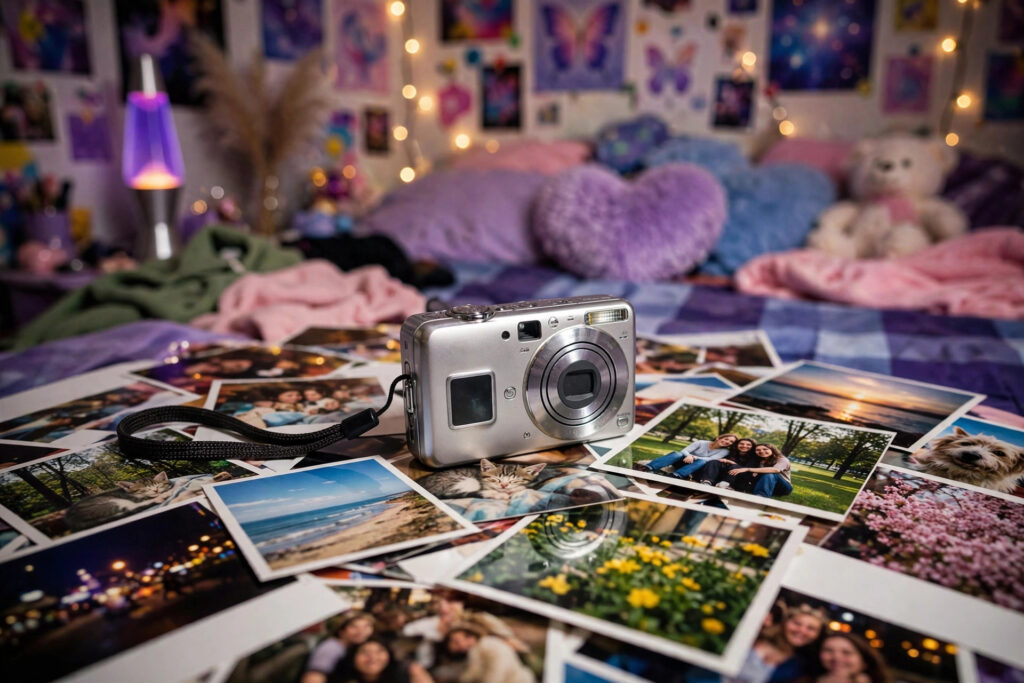
The short answer: Gen Z is reviving early-2000s digital cameras — “digicams” — because phone photos look too perfect. These chunky point-and-shoots deliver grainy flash photos, weird colors, and happy accidents that no filter can fake. It’s a rebellion against over-processed images, and the sales numbers back it up.
Your phone takes incredible photos. That’s exactly the problem.
Somewhere between the AI-enhanced night mode and the fifth retake of a “candid” laugh, phone photography started feeling like homework. Every shot gets smoothed, sharpened, and silently corrected before you even see it. And a generation raised on that polish is now reaching for the opposite: vintage digital cameras with tiny sensors, aggressive flashes, and absolutely no chill.
Walk into any college party this semester and you’ll spot one — a silver brick from 2007 hanging off someone’s wrist, flash blazing, capturing the night in all its blurry glory. The digicam comeback is real, it’s everywhere, and it’s weirder than simple nostalgia. Here’s what’s actually going on.
Your Phone Photos Started Looking Too Perfect
Modern smartphone cameras don’t really take photos anymore. They compute them. Multiple exposures get merged, faces get subtly reshaped, skies get swapped — all before the image hits your camera roll. The result is technically flawless and, increasingly, kind of boring.
That’s the fatigue driving this whole thing. As the Financial Times has reported, young photographers describe AI-processed smartphone images as “artificial” — and they’re not wrong. When every photo looks like it was shot by the same invisible algorithm, nothing feels personal anymore.
So what’s the fix? Go backward. Way backward.
What a Digicam Photo Actually Feels Like
A digicam photo has a personality your phone can’t imitate. The flash is too harsh. The colors skew green or orange for no reason. Someone’s always mid-blink. The background melts into motion blur while the foreground glows like a mugshot.
And somehow? It looks amazing.
There’s a specific texture to these images — grainy, a little washed out, weirdly honest. The tiny sensors from the 2000s couldn’t capture much detail, so they captured something better: atmosphere. A digicam photo of your friends at 1 AM doesn’t look like content. It looks like a memory.
No filters. No retakes. Just flash.

The Thrift-Store Treasure Hunt
Half the fun isn’t shooting — it’s finding the camera in the first place.
Digicam hunting has become its own subculture. Thrift stores, flea markets, estate sales, the dusty electronics bin at a garage sale — Gen Z shoppers treat these like archaeological digs. Uncovering a working point-and-shoot in a $5 bin feels like winning the lottery, except the prize is a hunk of 2008 plastic that takes terrible, beautiful photos.
Online, it’s a whole economy of its own. Dedicated reseller accounts on Instagram and Facebook Marketplace have racked up thousands of followers just by testing, cleaning, and flipping old cameras. Google Trends data shows searches for point-and-shoots climbing steadily since 2020, with a sharp spike in December 2024 — digicams have become a go-to gift.
There’s something deliciously rebellious about it, too. While everyone else queues for the newest phone, digicam kids are out here celebrating obsolescence. The worse the specs, the better the vibe.
A Camera That Can’t Ruin the Night
Here’s the part nobody talks about enough: a digicam lets you be present.
Your phone is a slot machine. Every time you pull it out to take a photo, there’s a decent chance you won’t put it away for twenty minutes. Notifications, messages, the group chat blowing up about the photo you just took — the camera is attached to the distraction machine.
A digicam does one thing. You take the picture, you put it away, and you stay at the party. There’s no screen full of apps begging for attention, no preview tempting you to reshoot seventeen times. Just point, flash, done.
That’s not nostalgia talking — it’s boundaries. And for a generation that’s openly exhausted by being reachable 24/7, a device that demands nothing from you feels almost radical.
The Numbers Behind the Comeback
This isn’t just a vibe shift — the money is moving too.
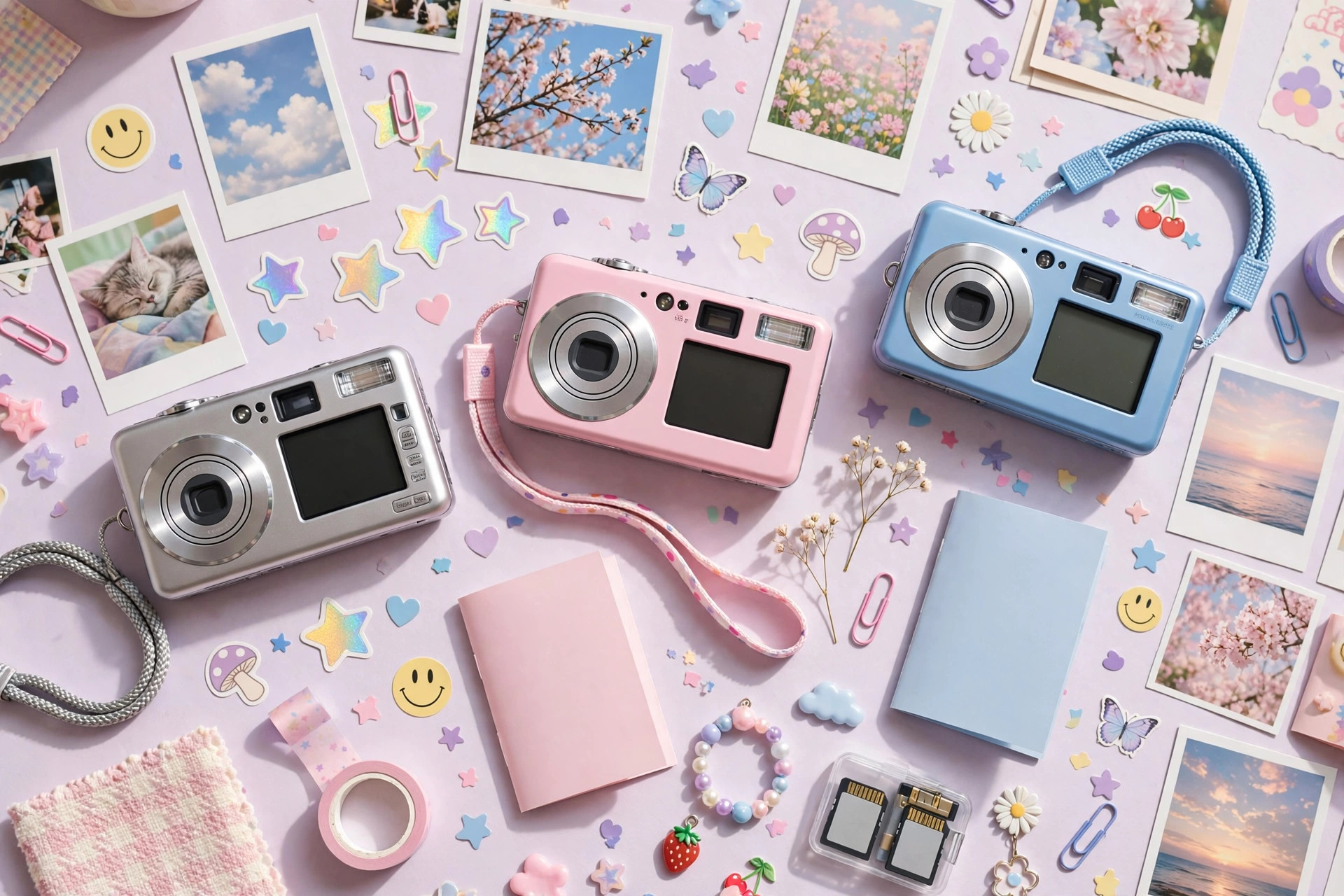
According to the Financial Times, citing figures from the Camera & Imaging Products Association (CIPA), global shipments of standalone cameras reached $5.5 billion, more than double the 2020 total. The market had cratered from a peak of 121 million units in 2010 down to 7.7 million in 2023 — then bounced back to 9.4 million. That’s the first real recovery since the iPhone ate the camera industry alive.
The generational split is stark. According to market research firm YPulse, around two-thirds of Gen Z and younger millennials now use some form of analog or retro tech — digicams, film cameras, vinyl, even flip phones. This isn’t a niche hobby anymore. It’s a pattern.
And it’s not just cameras. The same instinct is fueling vinyl’s endless revival, the return of wired earbuds, and the sudden coolness of devices that do exactly one thing. The digicam just happens to be the most photogenic example. Literally.
How to Spot a Digicam Person
You already know one. Or you are one. The signs are unmistakable:
- The wrist strap is always on. A digicam without its strap is a tragedy waiting to happen, and they know it.
- Their camera roll is chaos. Forty near-identical flash photos of the same moment, zero deleted. Deleting is for cowards.
- They print photos. Actual physical prints, stuck on walls, shoved in wallets, taped inside lockers. Remember those?
- They’ve named the camera. Don’t ask why. It just happened.
- They judge your phone photos. Not out loud. But you can feel it.
Sound familiar? Congratulations. You’re part of the least exclusive, most fun club on campus.
What Happens After the Trend Peaks?
Every trend has a lifecycle, and the digicam wave will crest eventually. The thrift-store bins will empty out. The novelty will fade for some. That’s fine — trends are supposed to move.
But something about this one feels stickier than the average aesthetic cycle. The complaint underneath it — that our images feel fake, that our devices demand too much — isn’t going away. If anything, as AI-generated imagery gets more convincing, the hunger for photos that are obviously, imperfectly real will only grow.
The digicam might be a phase. The instinct behind it isn’t.
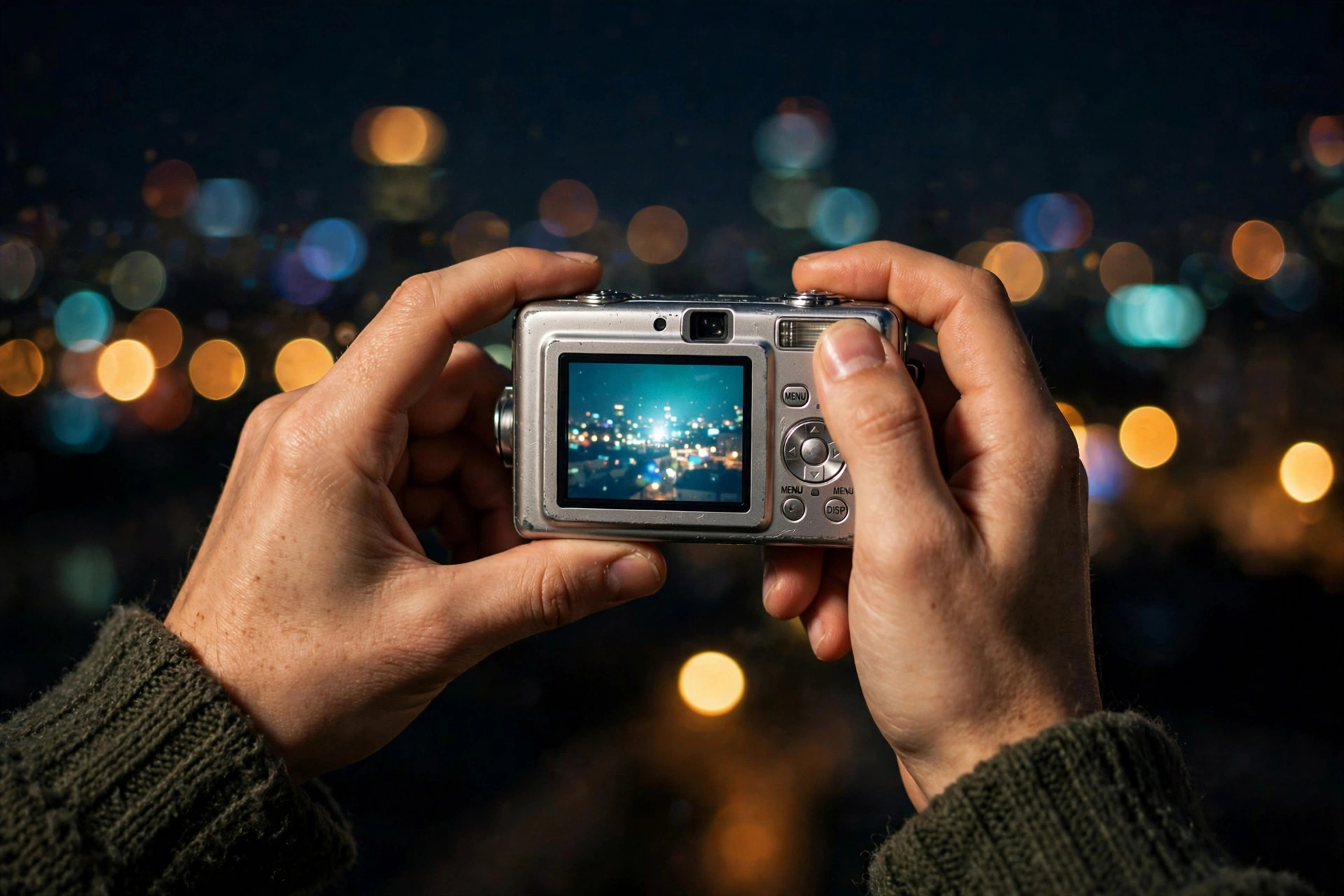
So next time someone blinds you with a flash from 2007 at a party, don’t roll your eyes. They’re not being retro for the aesthetic. They’re just trying to remember the night the way it actually felt — grainy, glowing, and a little bit out of focus.
Frequently Asked Questions
Why is Gen Z buying old digital cameras?
Mostly it’s about the look: grainy flash photos and strange colors that phones can’t reproduce. But it’s also about the experience — a digicam has no apps, no notifications, and no AI smoothing your face. According to a YPulse study, around two-thirds of Gen Z and younger millennials use some form of retro tech, driven by digital burnout as much as nostalgia.
What is a “digicam”?
“Digicam” is the nickname for early-2000s point-and-shoot digital cameras — the small, chunky compacts with tiny CCD sensors, pop-up flashes, and wrist straps. Models from brands like Canon and Sony are the most iconic, but the term covers the whole era of pre-smartphone digital photography.
Are vintage digital cameras actually making a comeback in sales?
Yes. According to the Financial Times, citing CIPA data, global shipments of standalone cameras hit $5.5 billion — more than double the 2020 figure — after collapsing from 121 million units in 2010 to 7.7 million in 2023. Google Trends data also shows searches for point-and-shoots rising since 2020.
Why do digicam photos look different from phone photos?
Old digicams use small CCD sensors with limited dynamic range, plus harsh direct flashes. That combination produces the signature look: high contrast, visible grain, motion blur, and unpredictable color shifts. Phones do the opposite — merging multiple exposures and applying AI corrections to eliminate exactly those “flaws.”
This article was created with AI assistance and reviewed by our editorial team before publishing.