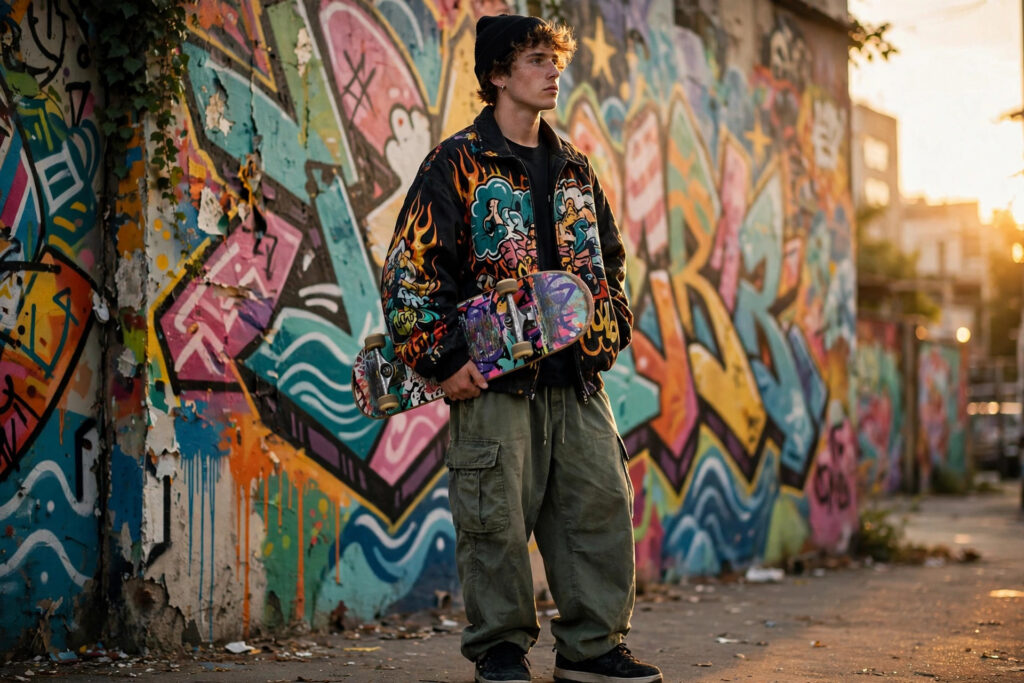
Streetwear didn’t climb up from the skate park to the runway by accident, and it didn’t get there by cleaning itself up, either. The new rules are simple to say and harder to pull off: fit beats logo, texture beats hype, and the outfit has to survive a whole day — bus rides, lectures, a shift, a late-night food run — not just one photo. If a piece only works standing still, it’s a costume. The clothes people actually reach for now are boxy, layered, a little beat-up, and styled like the wearer dressed for their own life first.
That’s the shift worth understanding. Ten years ago the formula was easy: cop the drop, wear the logo big, post the fit. Now the loudest logo in the room often reads as the least thought-through outfit in it. What replaced it isn’t minimalism, exactly. It’s fluency. People can tell when a hoodie has been lived in, when the cargos sit right, when the sneakers match the energy instead of just the colorway.
Rule one: silhouette first, branding last
Start with shape. Always.
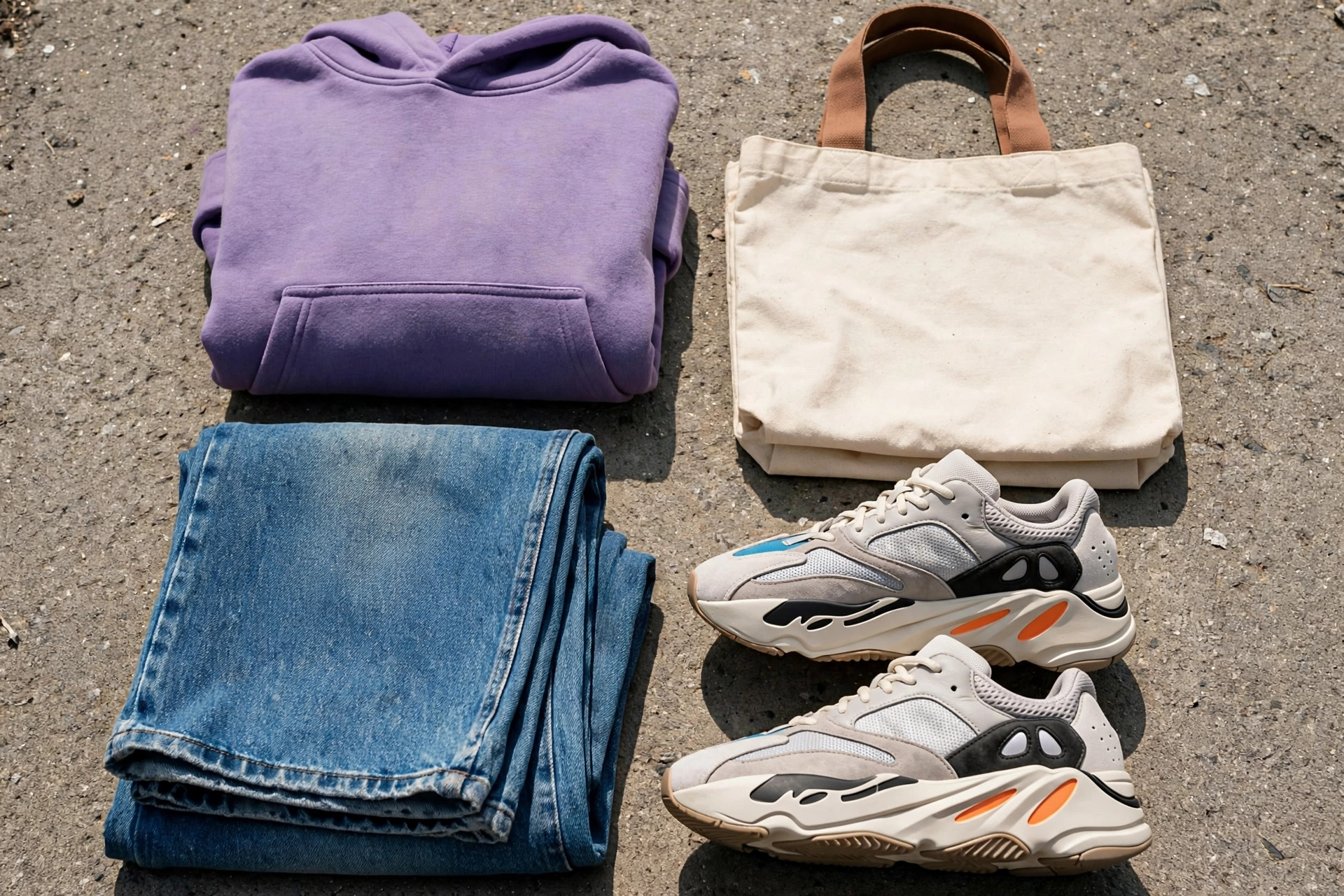
The current silhouette is volume on volume, or volume against something sharp. Wide-leg jeans with a cropped boxy tee. A huge hoodie over slim cargos. An oversized work jacket with straight-leg trousers that actually break over the shoe instead of pooling around it. Proportions do the talking now, and they say more than a chest logo ever did.
Here’s a quick test you can run in any fitting room. Cover the branding with your hand. Does the outfit still look like something? If the answer’s no, put it back. The pieces that last in a rotation earn their spot through cut, weight, and how they layer — a heavyweight tee that holds its shape after twenty washes will outlive three flimsy graphic tees, and everybody who’s owned both knows it.
The two-item rule for beginners
If you’re rebuilding from zero, don’t buy a whole new wardrobe in one stressed weekend. Pick two anchors: one pair of wide or straight-leg bottoms you love, and one boxy top layer. Build five outfits around those two pieces with what you already own. You’ll learn more about your own style in that week than in a month of scrolling haul videos.
Rule two: your sneakers set the ceiling
Shoes finish the sentence. A great outfit with tired, wrong-for-the-weather sneakers looks unfinished, and a plain outfit with the right shoes looks deliberate. That’s why skaters were ahead of everyone here — they picked shoes that could take a beating and still look good doing it.
You don’t need a wall of pairs. Honestly? Most people rotate two or three:
- One beat-up everyday pair — scuffs welcome, zero stress about rain or crowds.
- One clean pair — simple leather or suede, saved for days you want to look sharp.
- One wildcard — a chunky runner, a bright colorway, something with a bit of chaos in it.
Clean them sometimes. Not obsessively — just enough that the clean pair stays clean. A toothbrush, warm water, and ten minutes on a Sunday does it.
Rule three: customize something, anything
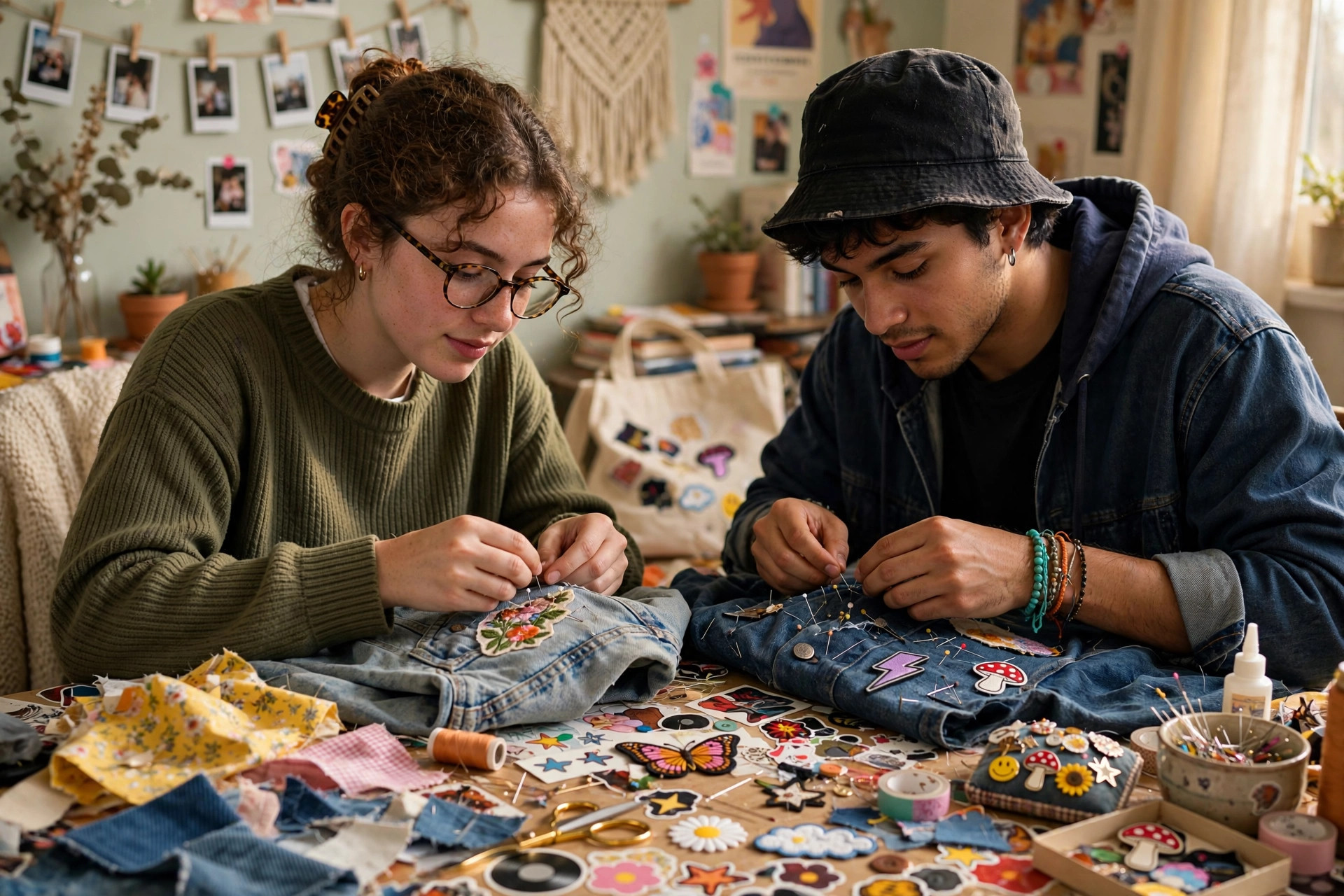
The runway side of streetwear and the skate-park side agree on one thing now: personal beats perfect. Designers send distressed, patched, hand-finished pieces down runways because that worn-in character is exactly what machine-perfect clothes lack. You can get there faster and cheaper than any runway can.
Sew a patch over the hole instead of throwing the jeans out. Swap the laces. Add pins to a tote, paint a back panel, crop a thrifted tee and leave the hem raw. None of this needs skill, by the way. It needs an afternoon and a bit of nerve. The first patch you sew on crooked? That’s not a mistake. That’s the whole point — it’s proof a person made it, not a factory line.
Where to find pieces worth customizing
Thrift stores and flea markets carry the best raw material: heavyweight tees, denim jackets, work shirts, and cargos from decades when clothes were built heavier. Look for fabric weight first, brand second. A thick, slightly faded jacket from twenty years ago will take patches and dye better than a thin new one, and it’ll cost you less than lunch in most cases.
Rule four: layer like the weather’s lying to you
Because it is. Campus days and city days both swing wildly — cold morning, warm afternoon, freezing bus. Layering isn’t just a look, it’s a survival strategy that happens to photograph well.
The working formula is boring and unbeatable: a base that fits close, a middle layer with volume, and an outer layer you can carry when it comes off. Tee, hoodie, work jacket. Tank, open shirt, denim jacket. Each layer should look fine on its own, because at some point in the day it will be on its own. If your outfit falls apart the second you take the jacket off, the outfit wasn’t finished.
Texture does the heavy lifting here. Denim against fleece. Canvas against knit. A matte cargo with a slightly shiny windbreaker. You don’t need matching colors so much as fabrics that argue with each other a little.
Rule five: dress for your actual day
This is the rule the skate park taught everyone. Skaters dress for falling down, walking miles, and weather turning — and their clothes still became the most copied look on earth. Function didn’t kill the style. Function was the style.
So steal that logic. Pockets you’ll use. Shoes you can walk forty minutes in. A bag that fits your laptop, a charger, and a water bottle without a fight. When an outfit handles a real day, it moves differently — you’re not tugging at it, guarding it, or thinking about it. That ease reads on camera and in person. It’s the thing people call “effortless,” and it’s almost never effortless. It’s just prepared.
What to skip entirely
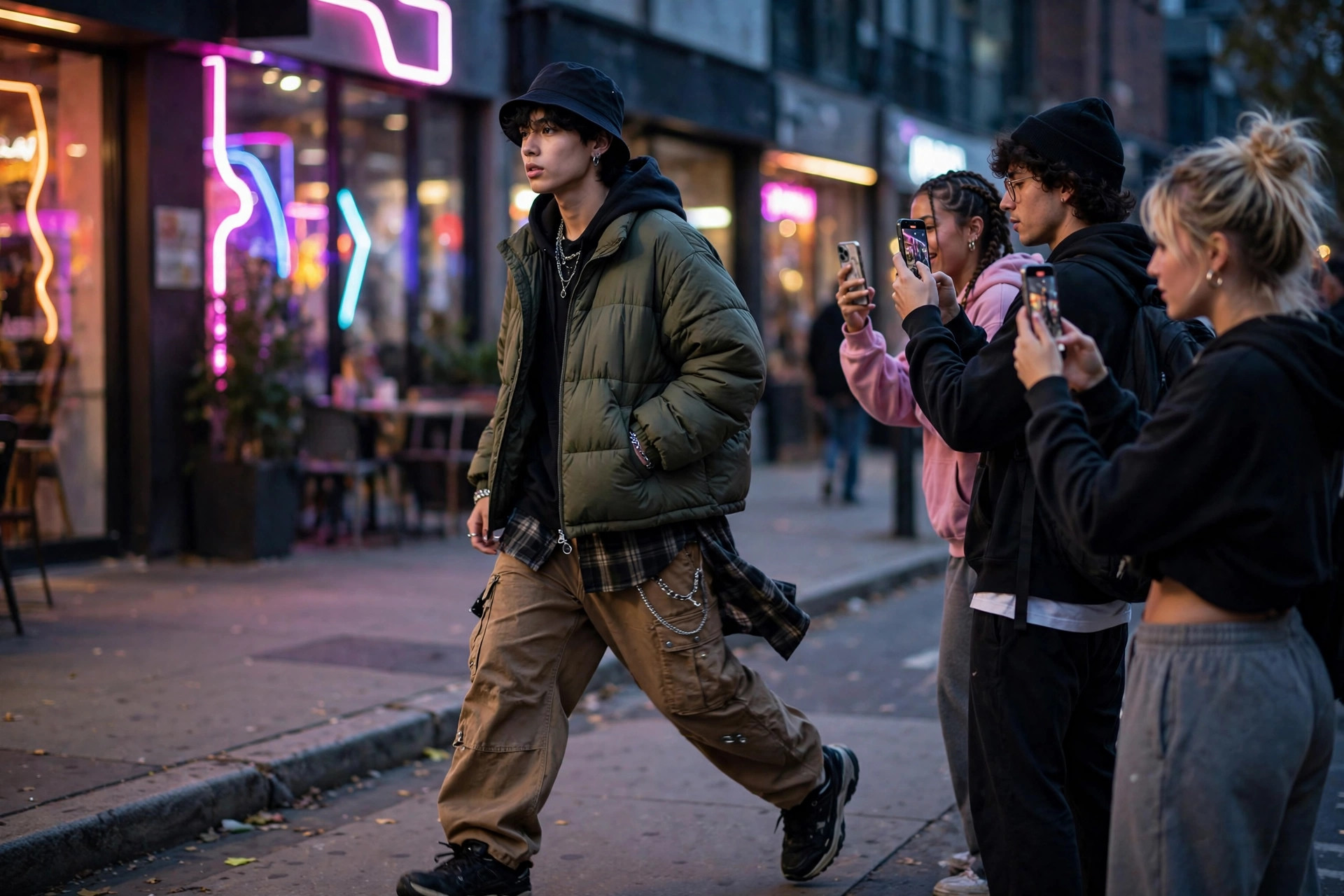
A few habits are quietly dating an outfit right now. Head-to-toe matching sets in identical fabric can look like a uniform unless you break them up with different shoes or a contrasting layer. Buying a piece purely because it sold out fast is another one — scarcity isn’t style, and your closet doesn’t care what resold for what. And retire the idea that expensive means better dressed. The best-dressed person in most rooms is wearing something old, something thrifted, and something they customized, all at once.
Frequently asked questions
How do I start wearing streetwear without looking like I’m in costume?
Start with silhouette, not logos. Swap your slimmest jeans for a straight or wide leg, add one boxy layer, and keep your current sneakers. Change one element at a time and wear each change for a full day — if you stop noticing it by lunch, it fits your life.
How many pieces do I actually need for a streetwear rotation?
Fewer than you think. Two anchor bottoms, three or four tops that layer, one strong outer layer, and two or three pairs of shoes can produce weeks of combinations. Variety comes from mixing proportions and textures, not from owning more.
Can streetwear work for dressier settings?
Yes, if you borrow the tailoring, not the graphics. Clean sneakers, straight-leg trousers, a boxy but plain overshirt, and no loud branding reads sharp almost anywhere. Keep one element relaxed so it still feels like you.
Is thrifted streetwear actually better than buying new?
For heavyweight tees, denim, and work jackets, older pieces are often sturdier and already broken in, which suits the look. Buy new for basics you’ll wear hard and wash often. A mix of both is what most well-dressed people quietly do.
What’s the one upgrade that makes the biggest difference?
Fit at the hem. Trousers that break at the right point over your shoes change how every top you own looks. A simple hem costs little at any tailor, and it’s the detail people notice without being able to name it.
This article was created with AI assistance and reviewed by our editorial team before publishing.