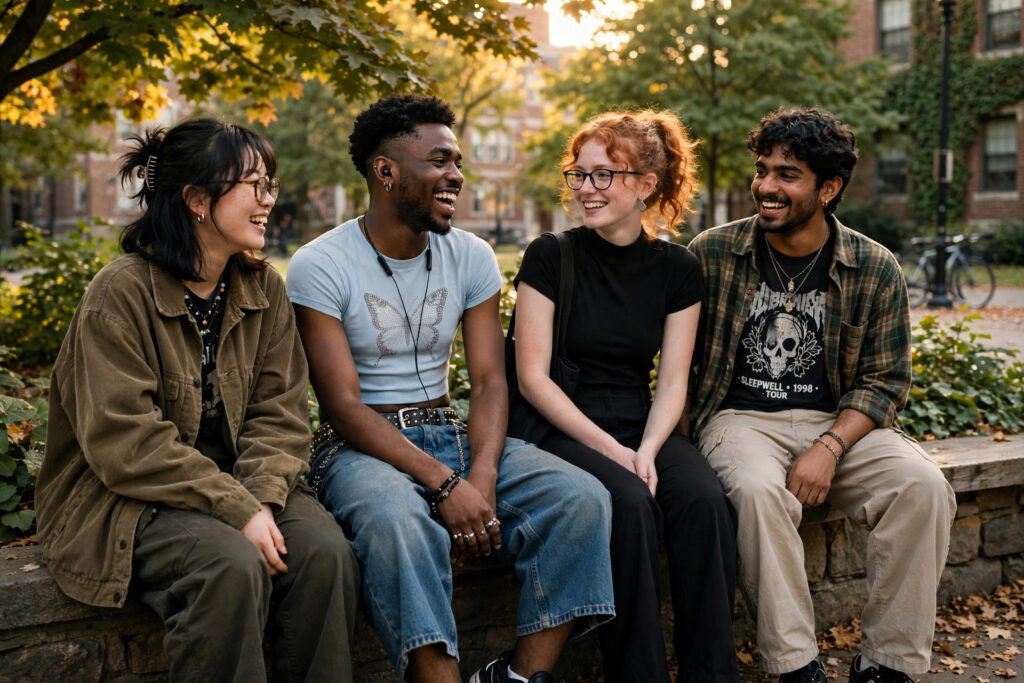
Walk across any college campus between classes and you’ll start to notice it: the same style tribes, showing up again and again like uniforms nobody agreed on. There’s the kid in head-to-toe thrift-store layers, the one in crisp monochrome who looks like they iron everything, the Y2K revivalist with the flip phone case, the outdoor-tech kid dressed for a hike they’re never going on, and the comfy-first regular in sweats who somehow still looks put together. It’s not about money — some of the best-dressed students on campus spent less than the price of a textbook. It’s about identity, and right now campus style is basically a map of how Gen Z sees itself.
So what are students actually wearing in 2026? Five loose tribes dominate the scene, each with its own logic, its own references, and its own unspoken rules. Here’s the field guide.
The Thrift-Maximalist
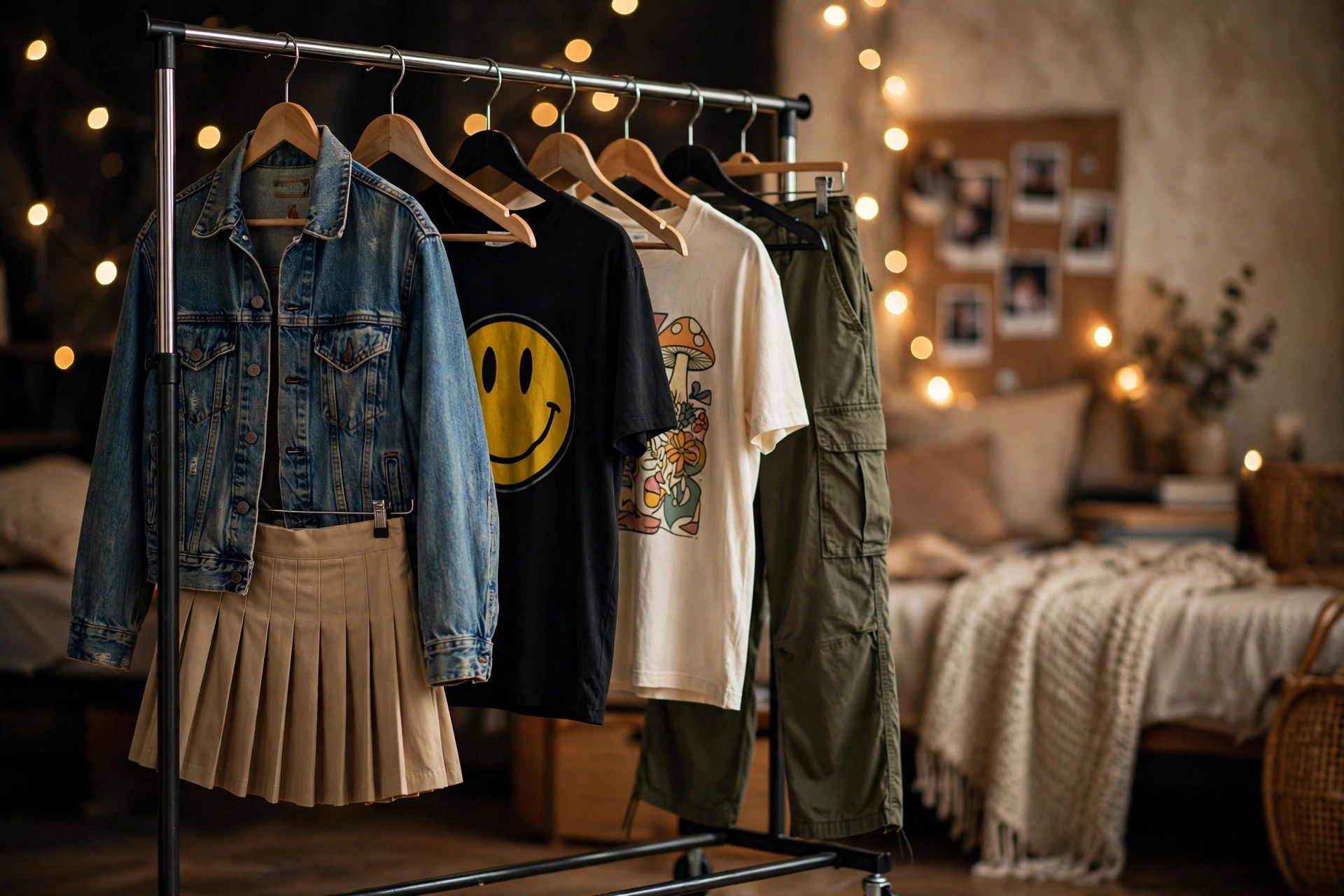
Picture this: oversized vintage blazer, band tee underneath, plaid skirt or baggy cargos, chunky boots, a tote bag covered in pins. Nothing matches, exactly, and that’s the whole point. The thrift-maximalist treats the thrift store like an archive, not a bargain bin — every piece has a backstory, or at least the look of one.
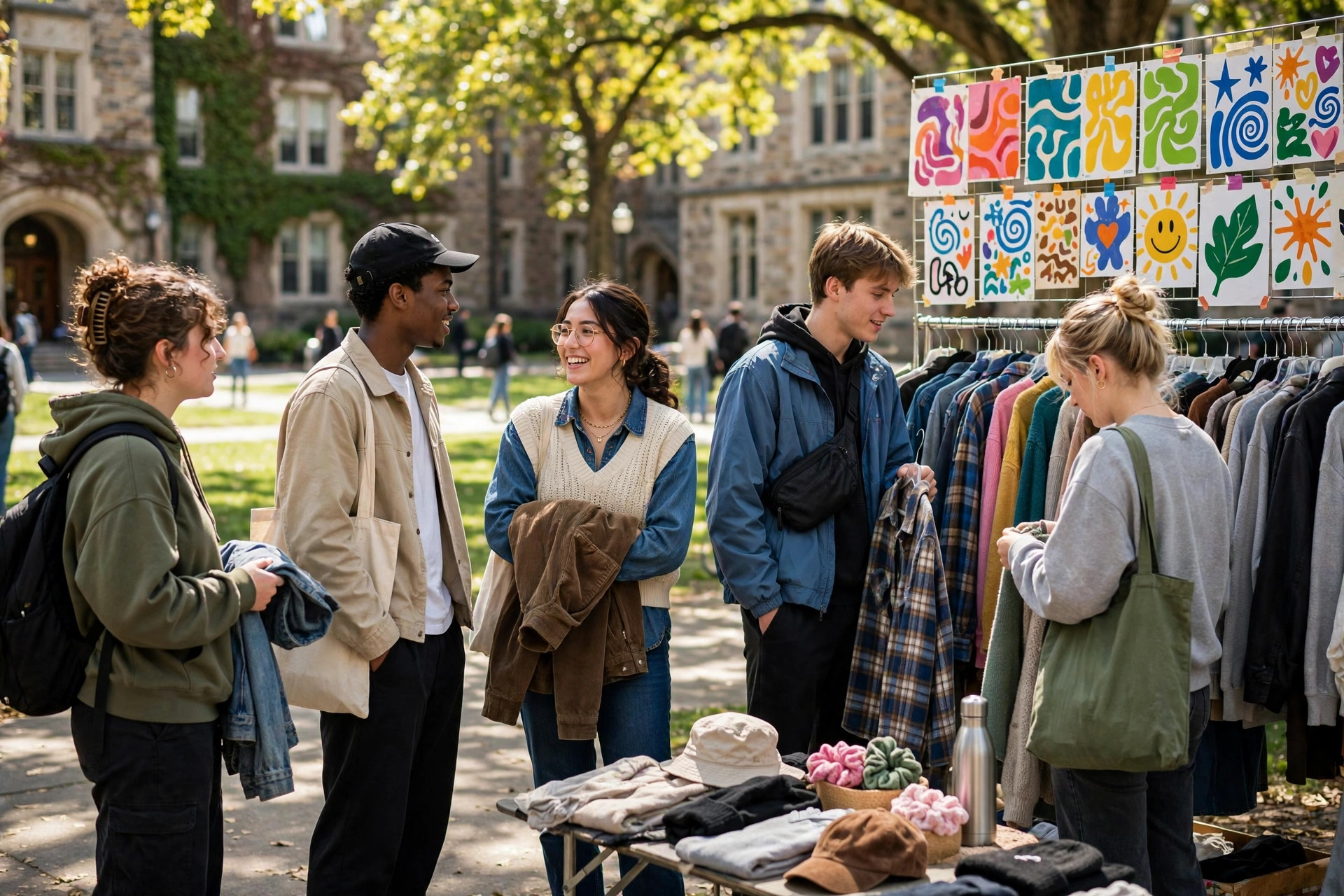
This tribe runs on layers. A single outfit might pull from three different decades, and the skill isn’t coordination, it’s confidence. The best thrift-maximalists aren’t following a rulebook; they’re building collages. You’ll see them at campus pop-up markets flipping through racks other people walked past, finding the one weird jacket that makes the whole outfit.
Why it’s huge right now: sustainability is part of it, sure, but the bigger driver is originality. When everyone’s feed looks the same, a one-of-one vintage piece is the fastest way to stand out. Nobody else on campus has that exact jacket, and everyone knows it.
The Clean-Cut Minimalist
And then there’s the opposite end of the spectrum. Neutral palette. Clean lines. A perfectly fitting white tee, straight-leg trousers, simple sneakers, maybe a structured jacket. No logos, no noise. The minimalist looks like they woke up, opened a capsule wardrobe, and chose calm.
This isn’t laziness — it’s discipline. Minimalists invest in fit and fabric rather than volume. The outfit looks simple because every piece was chosen carefully. There’s a whole quiet confidence to it: no trends, no references to decode, just good proportions and zero fuss.
The tribe has been growing partly as a reaction to the maximalist chaos around it. When half the campus is wearing everything at once, restraint becomes the statement.
The Y2K Revivalist
Low-rise jeans. Tiny shoulder bags. Baby tees, cargo minis, butterfly clips, velour tracksuits reborn. The Y2K revivalist dresses like it’s 2003 and refuses to acknowledge what happened since. It’s playful, it’s a little ironic, and it’s everywhere — from lecture halls to late-night food runs.
What makes this tribe interesting is that it’s not really about the 2000s. Most of its members were toddlers, if that, when the era ended. It’s nostalgia for something they never lived through, filtered through TikTok and thrifted copies. That’s why it feels fresh instead of costume-y — it’s a remix, not a reenactment.
The Y2K crowd also wins the accessories game. Tiny bags, chunky sneakers, layered necklaces, flip phone cases on modern phones. The details carry the whole look.
The Outdoor-Tech Kid
Hiking boots on the quad. Cargo pants, fleece layers, a puffer vest, and a backpack that could survive a mountain. The outdoor-tech kid dresses like the day’s plan involves a trailhead, even when the plan is three lectures and a coffee. This is the gorpcore tribe, and it shows no signs of leaving campus.
The appeal is practicality with an aesthetic twist. Everything has pockets, everything is weather-resistant, everything looks rugged. But let’s be honest — it’s also about the vibe. There’s something reassuring about wearing gear built for the wilderness when your biggest adventure is the dining hall. It reads as capable, low-maintenance, ready for anything.
Watch for the details: carabiners clipped to belt loops, beanies in every color, trail-running sneakers worn with absolutely everything.
The Comfy-First Regular
Last but definitely not least: the majority. Sweats, hoodies, oversized crewnecks, leggings, slides. The comfy-first regular is dressed for an 8 a.m. lecture and makes no apologies about it. But here’s the thing — the modern version isn’t sloppy. Matching sweat sets, clean sneakers, good hair: comfort has become its own aesthetic.
This tribe won the pandemic and never gave the crown back. Loungewear got an upgrade, athleisure got a rebrand, and now “I dressed for comfort” is a legitimate style position instead of a confession. The best comfy-first outfits are actually coordinated — same palette, right fit, intentional layers.
And honestly? There’s something radical about refusing to perform for the quad. The comfy-first regular dresses for themselves, and it shows.
Why Tribes, Why Now?
Style tribes aren’t new — every generation of students has had them. What’s different now is how fast they form and dissolve. A trend can go from one dorm room to the whole campus in a week, carried by a single viral post. Tribes used to last years; now they last semesters.
That speed has an upside: campus style feels more democratic than it’s ever been. You don’t need a big budget or the right zip code to participate. The thrift-maximalist and the comfy-first regular spend almost nothing; the minimalist and the outdoor-tech kid are more about intention than expense. Style on campus right now is about how you see yourself, not how much you spent.
The other thing worth saying: most students don’t live in one tribe. They drift. Monday might be comfy-first, Friday might be thrift-maximalist with friends. The tribes are reference points, not boxes. Campus style works because nobody’s checking IDs at the door.
How to Find Your Lane
If you’re standing in front of your closet feeling like you belong nowhere, good news: you’re basically everyone. A few low-pressure ways to figure out your thing:
- Notice what you rewear. The pieces you reach for when nobody’s watching? That’s your actual style. Build around them.
- Steal one element, not the whole tribe. Like the outdoor-tech vibe but not the full hike fit? Borrow the cargo pants and skip the carabiners.
- Let your closet evolve. Nobody’s style arrives fully formed. Campuses are one of the few places where experimenting is basically the culture.
- Comfort is a valid compass. If you don’t feel like yourself in it, it doesn’t matter how cool it is.
The students who look the best on campus aren’t following a trend. They’re the ones who found the tribe — or the mix of tribes — that feels like them, and then stopped overthinking it.
Frequently Asked Questions
What are the main style tribes on college campuses right now?
The five most visible tribes are the thrift-maximalist (layered vintage finds), the clean-cut minimalist (neutral capsule wardrobe), the Y2K revivalist (early-2000s throwback pieces), the outdoor-tech kid (hiking-inspired gorpcore), and the comfy-first regular (elevated loungewear). Most students mix and match between them.
Do you need a big budget to dress well on campus?
No. Some of the most distinctive campus styles, like thrift-maximalism and comfy-first dressing, cost very little. Fit, confidence, and intentionality matter far more than price tags.
Is gorpcore still popular with students?
Yes. The outdoor-tech aesthetic — cargo pants, fleece layers, trail sneakers, hiking-inspired accessories — remains one of the most consistent campus looks, valued for both practicality and its rugged, capable vibe.
How fast do campus fashion trends change?
Faster than ever. Thanks to social media, a trend can spread from one dorm to an entire campus within a week, which is why today’s style tribes tend to last semesters rather than years.
What’s the easiest way to develop a personal style in college?
Start with what you already rewear, borrow single elements from tribes you like instead of copying whole looks, and treat comfort as a compass. Campus is one of the few places where style experimentation is the norm.
This article was created with AI assistance and reviewed by our editorial team before publishing.